
About Buddhism
The Real Cause of Happiness
All living beings wish to be happy and avoid suffering, yet few understand the real causes.
We often believe happiness comes from food, money, friends, or success. But these things can also bring worry, stress, and even harm.
Despite our technological and material progress, human happiness has not increased. Problems remain; in fact, they are greater than ever.
This shows that happiness and suffering are states of mind. Their real causes lie within, not in external conditions.
Inner Peace: The Source of Happiness
Lasting happiness comes only from inner peace. To experience this, we need to train our mind through meditation, reducing negative states and cultivating positive ones.
Through this training, we can eventually attain permanent inner peace, or nirvana, which will solve all our problems and fulfil the true meaning of our human life.
Transforming daily activities into the path
There are many different traditions within Buddhism, and Nagarjuna KMC is part of the New Kadampa Tradition. Our particular emphasis is on integrating Buddhist ideas into daily life, making it perfectly suited to the busy modern world.
In the New Kadampa Tradition (NKT), the key purpose of the teachings is to help people develop wisdom and compassion in order to transform their minds and their lives.
By applying the teachings of Buddha in everyday situations, anyone—regardless of their background—can learn how to reduce suffering, develop inner peace, and cultivate positive qualities like love, patience, and wisdom.
Ultimately, the purpose is to enable everyone to make progress on the path to liberation and enlightenment, while also finding deeper happiness and meaning right now, in the midst of modern life.
What is Modern Buddhism?
Modern Buddhism in the New Kadampa Tradition refers to the presentation of Buddha’s ancient teachings in a way that is clear, practical, and directly applicable to modern daily life, regardless of a person’s background, culture, or belief system.
This approach was developed by Venerable Geshe Kelsang Gyatso Rinpoche, the founder of the NKT, who dedicated his life to making the essence of Buddha’s wisdom accessible and relevant to people today. In his words:
“Modern Buddhism is a special presentation of Buddha’s teachings that retains their original meaning while making them easy to understand and practise in modern society.”
— from the book Modern Buddhism
How do you practice Buddhism in the New Kadampa Tradition?
Kadampa Buddhists combine study, meditation and work. They place a lot of importance on the study of Buddhist texts, the practice of meditation, and working in practical ways to benefit others. The way practitioners try to benefit others is by showing how to put the teachings into practice to improve their lives, and working to make Buddhist teachings widely accessible. This focus on study, meditation and work is intended to deepen practitioners’ understanding and practical application of Buddhist principles.
Free eBook
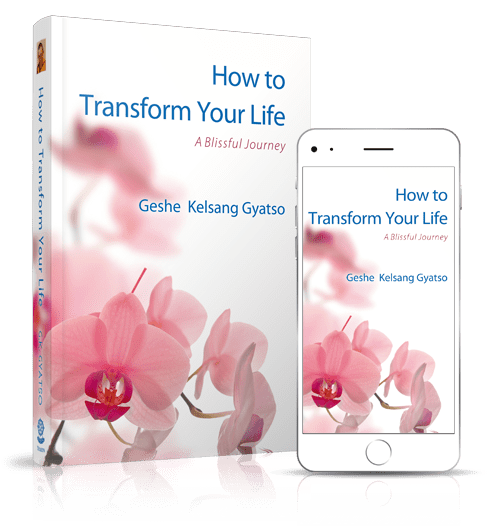
A supremely accessible guide to solving your own and others' problems. This powerful book is available for free in ePub format.
"Through practicing the instructions presented in this book we can transform our life from a state of misery into one of pure and everlasting happiness. These instructions are scientific methods to improve our human nature. Everybody needs to be good-natured with a good heart, because in this way we can solve our own problems as well as those of others, and we can make our human life meaningful."
Free eBook
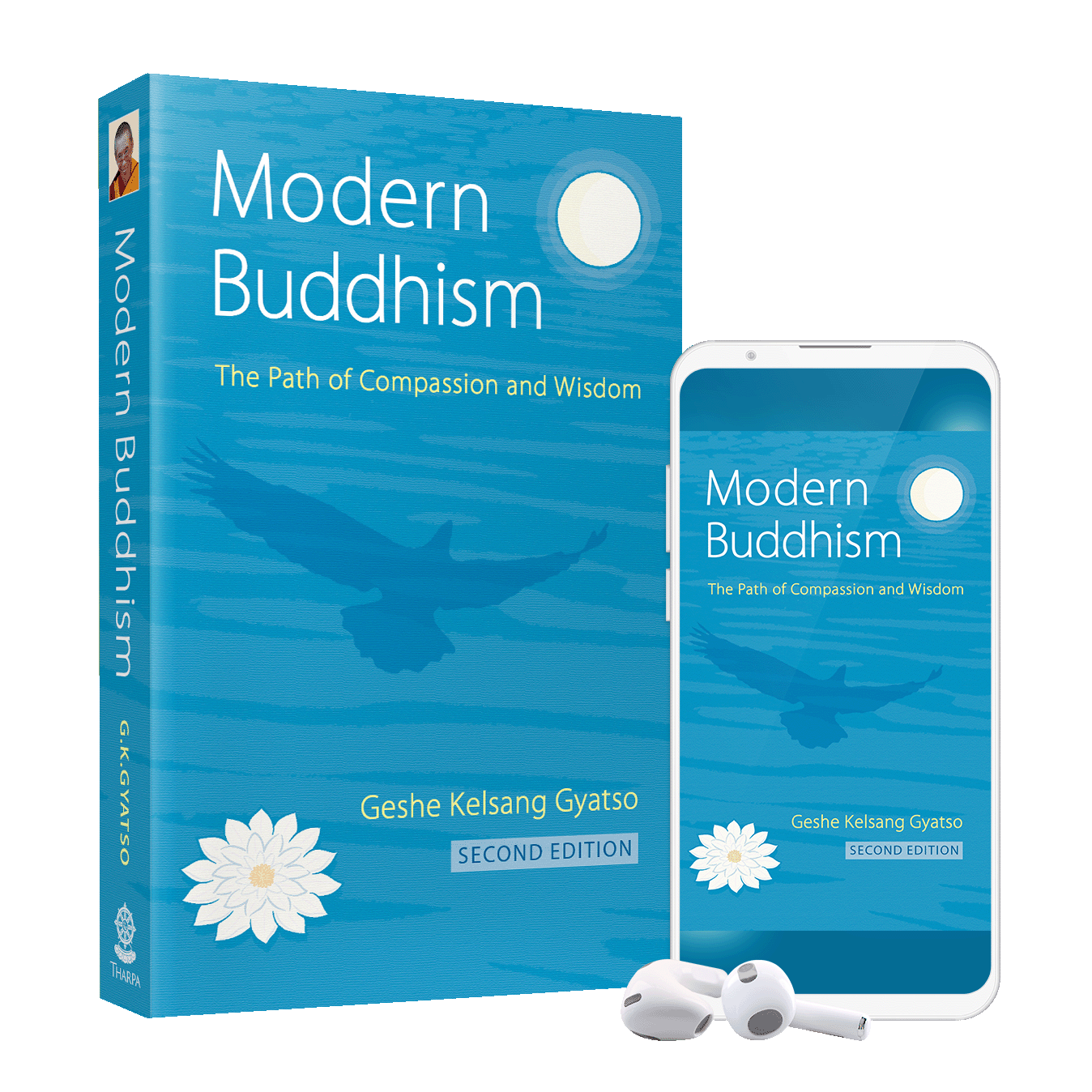
This eBook Modern Buddhism – The Path of Compassion and Wisdom, in three volumes, is being distributed free of charge. The author, Geshe Kelsang Gyatso, says:
“Through reading and practising the instructions given in this book, people can solve their daily problems and maintain a happy mind all the time.”
So that these benefits may pervade the whole world the author wishes to offer this eBook freely to everyone.
FAQs
The New Kadampa Tradition – International Kadampa Buddhist Union (NKT-IKBU) is a global Buddhist community founded in 1991 by Venerable Geshe Kelsang Gyatso Rinpoche. Its aim is to uphold and make available the authentic teachings of Kadampa Buddhism for the benefit of all.
Rooted in the teachings of Buddha Shakyamuni as passed down from the great Buddhist masters Atisha and Je Tsongkhapa, Geshe Kelsang Gyatso has made the timeless wisdom of Buddha's teachings accessible to people everywhere.
Through its international network of affiliated centers and community-based initiatives, the NKT shares the practical benefits of these teachings with people of all backgrounds and walks of life.
The New Kadampa Tradition is an independent Buddhist tradition with no political affiliations. Legally registered as a non-profit charitable organization in England under the name New Kadampa Tradition – International Kadampa Buddhist Union (NKT-IKBU).
The NKT main office is located at Manjushri Kadampa Meditation Center in Ulverston, UK, which is the Mother Center of the New Kadampa Tradition – International Kadampa Buddhist Union.
Being a Buddhist means taking refuge in the Three Jewels–Buddha, Dharma, and Sangha—as the true and reliable protection from suffering. Going for refuge is the foundation of the Buddhist path and the essential step that marks the beginning of someone’s life as a Buddhist.
Going for refuge means developing heartfelt trust in:
- Buddha as our guide and perfect example
- Dharma (Buddha’s teachings and our own inner experience of them) as the actual protection from suffering
- Sangha (the spiritual community) as our companions and support on the path
In the NKT, we train in this inner refuge by learning to turn inward for solutions to our problems, relying on the wisdom and methods taught by Buddha to transform our mind. We gradually let go of external objects or conditions as our main source of happiness or protection, and instead turn to Dharma practice to find real peace and freedom.
For those who wish to formally become Buddhist, there is the opportunity to take the Refuge Vow—a beautiful and meaningful ceremony in which one makes a conscious decision to rely on the Three Jewels and commit to living in accordance with Buddhist principles. This vow marks the beginning of a new life, one based on spiritual practice, ethical conduct, and the intention to progress toward liberation and enlightenment for the benefit of all beings.
The New Kadampa Tradition is a modern presentation of Kadampa Buddhism that includes the Hinayana, Mahayana and Vajrayana paths. They are rooted in the teachings of Buddha and the great Indian and Tibetan masters such as Atisha and Je Tsongkhapa.
All practices are grounded in love and compassion for all living beings. With the guidance of Venerable Geshe Kelsang Gyatso Rinpoche, these teachings are presented in a way that speaks to modern people — clear, accessible, and relevant to the pace and problems of contemporary life.
The three key teachings are:
- Lamrim, or “Stages of the Path to Enlightenment.” This practical, step-by-step guide takes us from the basics of developing a kind heart, through cultivating deep wisdom all the way to the attainment of enlightenment to benefit all living beings.
- Lojong, or “Training the Mind.” These teachings show how we can use everyday difficulties as opportunities to grow stronger spiritually, developing greater patience, compassion, and wisdom—and learning to keep a calm and positive mind, whatever life brings.
- Mahamudra. According to Sutra, this refers to the profound view of emptiness. A direct realization of emptiness enables us to accomplish complete liberation from the sufferings of samsara. According to Tantra, or Vajrayana, Mahamudra is the union of spontaneous great bliss and emptiness through which we can attain full enlightenment.
In the New Kadampa Tradition, practitioners rely principally upon four enlightened beings, known as the Four Kadampa Deities.
Buddha Shakyamuni – the founder of Buddhism. Buddha Shakyamuni is the principal object of refuge for all Buddhists.
Avalokiteshvara – the Buddha of Compassion. By relying upon Avalokiteshvara we naturally increase our own compassion.
Green Tara – the female Buddha of wisdom and compassion. Kadampas rely on her especially in times of difficulty and for quick help in removing obstacles.
Dorje Shugden – the Wisdom Dharma Protector for modern Kadampas, who helps, guides and protects sincere practitioners from inner and outer obstacles by granting blessings, increasing their wisdom and fulfilling their virtuous wishes.
Through relying on these four Deities, Kadampa practitioners emphasize the essential practices of Kadampa Buddhism that enable them to gain pure Dharma realizations and make progress on the spiritual path.
All Buddha’s teachings help to improve our mental well being and happiness. However, we are not mental health experts and always recommend people with mental health problems to seek help from professional medical health practitioners.
Although there are healing practices taught within Kadampa Buddhism, those suffering from physical illness are always advised to seek medical attention.
As a tradition, the focus is on operating independently, without political affiliations or ties to specific cultural, national, or ideological identities. Emphasis is placed on pure spiritual practice, free from worldly concerns.
The New Kadampa Tradition (NKT) holds a respectful and inclusive view towards other religions.
As explained in Modern Buddhism by Venerable Geshe Kelsang Gyatso, the founder of the NKT, there are many different forms of Buddhism–such as Zen, Theravāda, and others–and all are regarded as equally precious. Though their presentations may differ, they are all pure lineages of Buddha’s teachings, and suited to the needs and dispositions of different people.
This spirit of respect also extends beyond Buddhism. The NKT respects any religion that teaches a path to true happiness.
The New Kadampa Tradition (NKT) takes complaints of misconduct seriously and follows a comprehensive Safeguarding Policy and Procedures, adopted in 2018. This policy applies to all individuals in positions of responsibility within the tradition, including teachers, staff, and volunteers.
The policy aims to protect everyone–especially children and adults-at-risk–and reflects the NKT’s commitment to maintaining a pure, peaceful, and respectful environment.